If you read nothing else
- A qualified pilot flies every tandem flight, and the flight itself, not a separate instructor watching from the ground, is what you are trusting.
- A paraglider is a wing that flies rather than a parachute that falls, and a tandem passenger is clipped into a harness on that same wing beside the pilot.
- A flight held back for wind is the ground decision working as intended, and it happens before anyone walks up to the launch, not partway through the day.
- This flight is not suitable for children under five, pregnant women, people with heart problems or epilepsy, anyone over 91 kilograms, or anyone with a mobility impairment.
What a Passenger Is Actually Trusting
Ask what makes a tandem paragliding flight safe and the honest answer is not a statistic. It is three things: the person flying the wing, the wing itself, and a decision made on the ground before anyone walks up to the launch. At Interlaken, that launch sits above the village of Beatenberg, and the flight ends on the Höhematte, the public meadow in the middle of town. Nothing about that structure is unusual for tandem paragliding anywhere, and understanding it is more useful than any number would be.
None of this is about beating the odds. It is about how the flight is put together before a passenger ever gets near the launch: a qualified pilot, a single wing carrying two people rather than two separate systems, and a judgement call that happens on the ground rather than in the air. Each of those is worth taking in turn, because together they answer what a nervous first-timer is really asking.
A Wing That Flies, Not a Parachute That Falls
The single most useful thing to understand before a first flight is the difference between a paraglider and a parachute. A parachute is built to slow a fall. A paraglider is a wing, shaped to generate lift the way an aircraft wing does, and it is flown rather than dropped: it glides forward, turns, and is steered toward a chosen landing rather than coming down wherever gravity puts it.
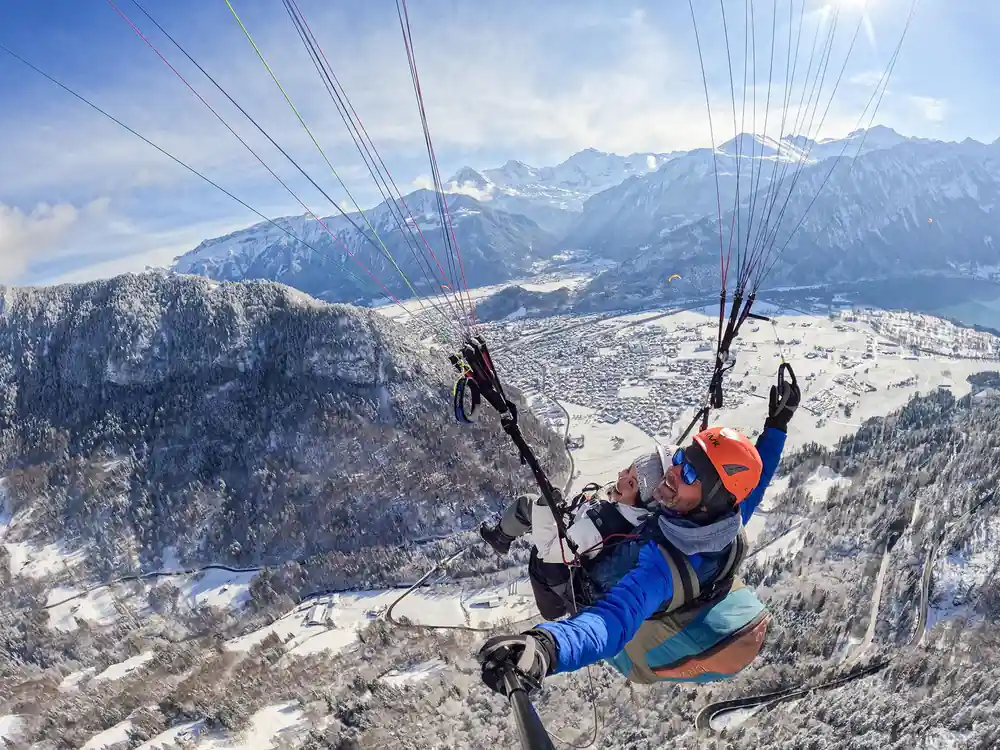
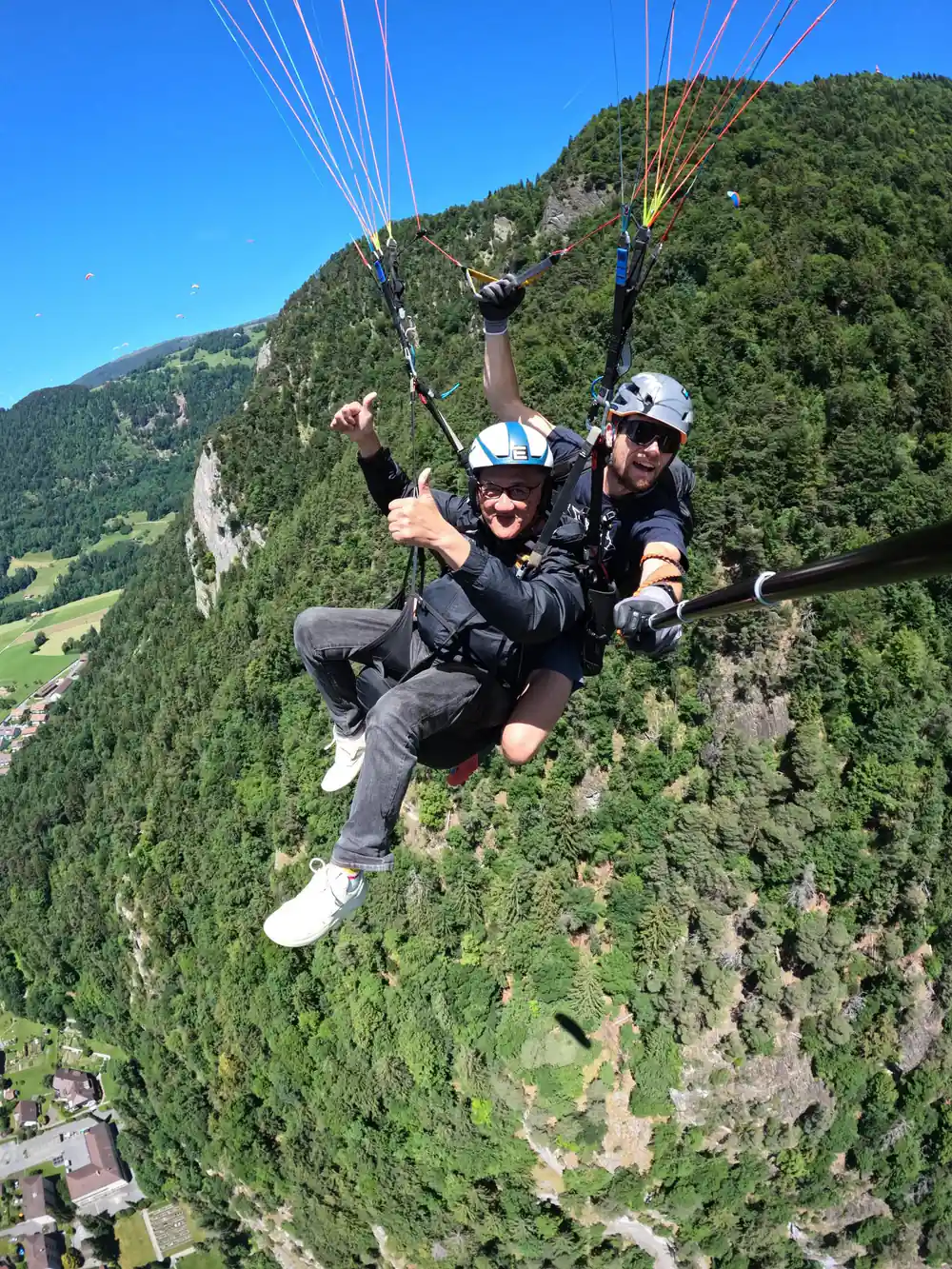
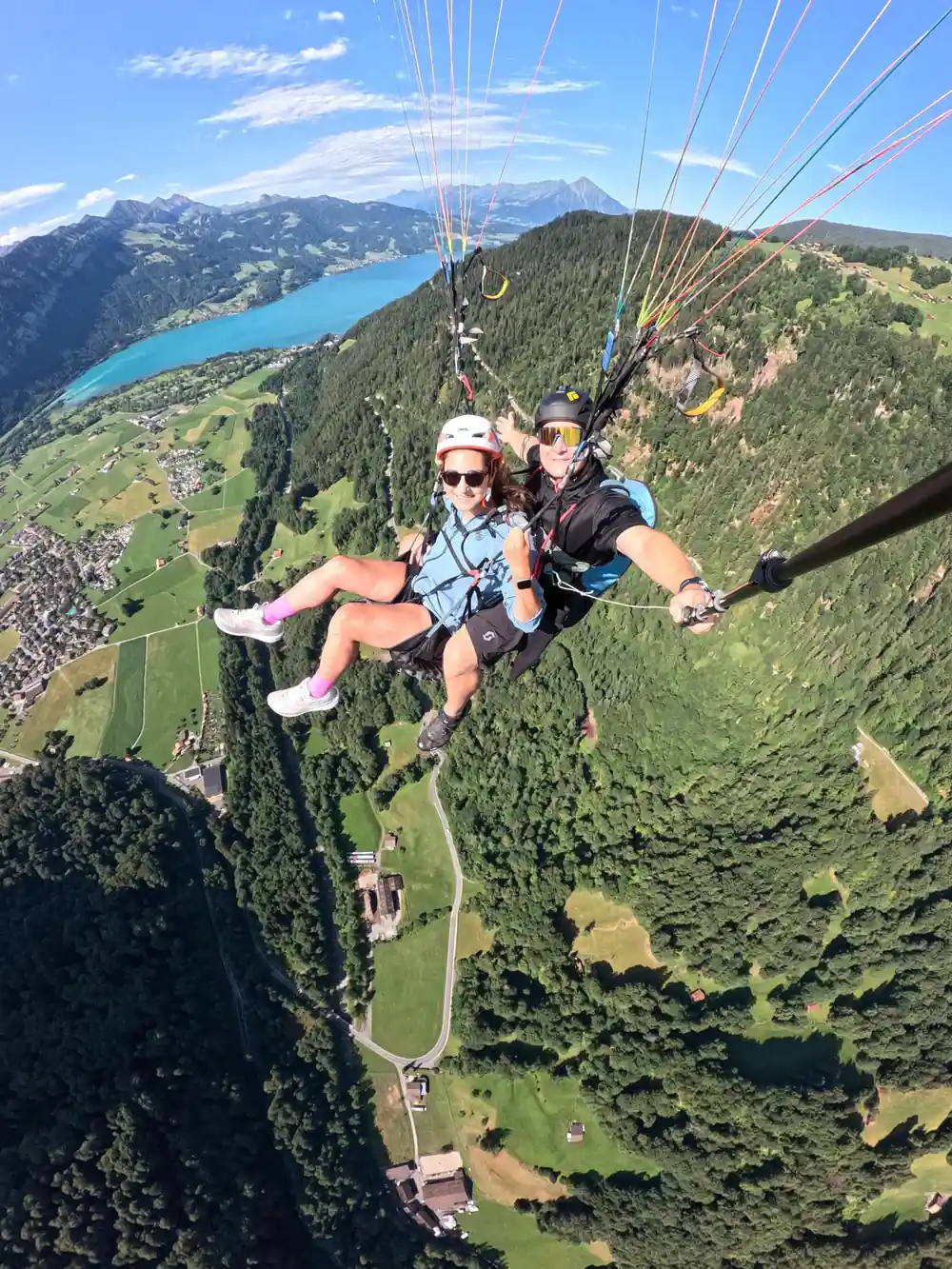
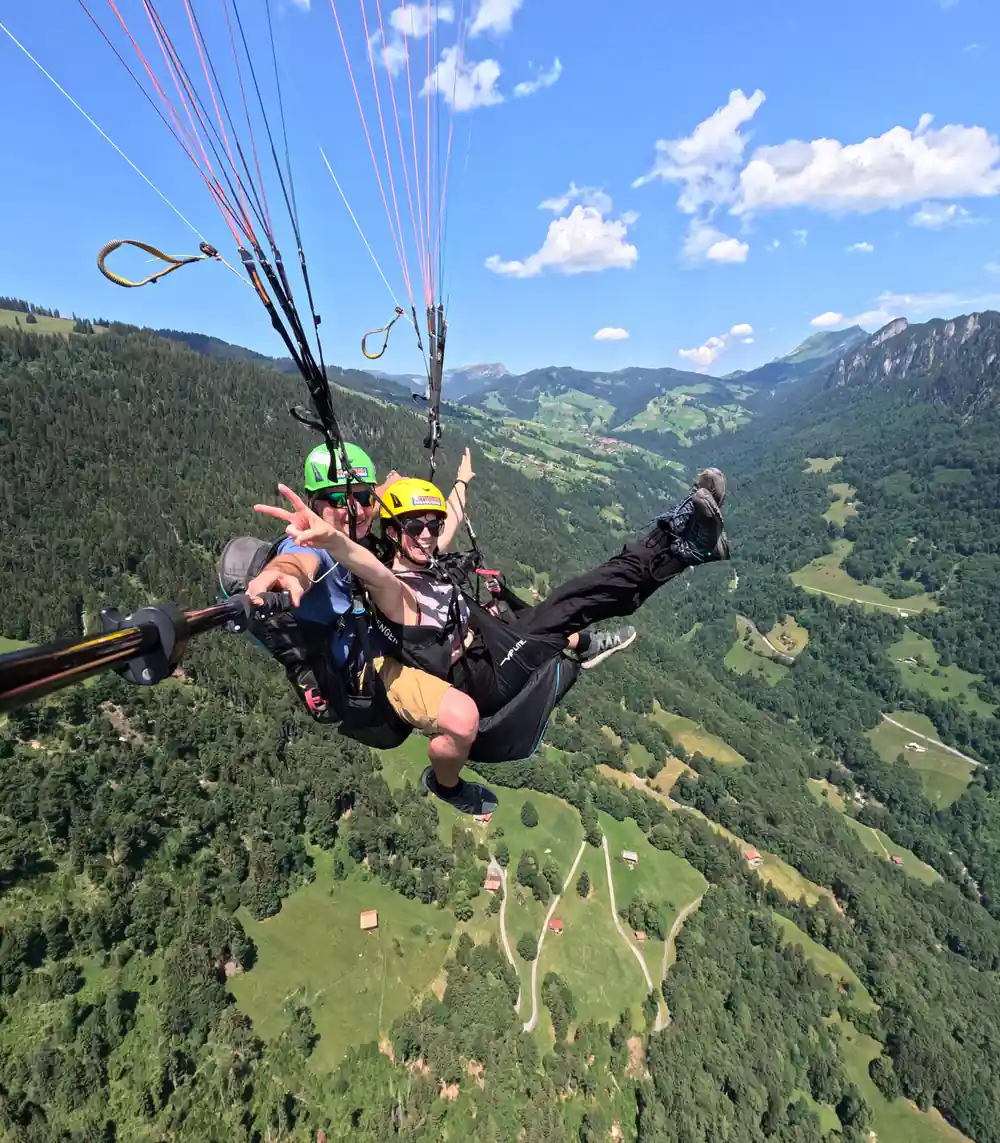
That distinction is also what a tandem passenger is physically attached to. You are clipped into a harness on the same wing as the pilot, sitting slightly ahead of and below them, not carried underneath a separate system on a line of your own. It is one aircraft with two people on it, and the pilot's inputs, the brakes, the weight shift, the turns, fly both of you at once.
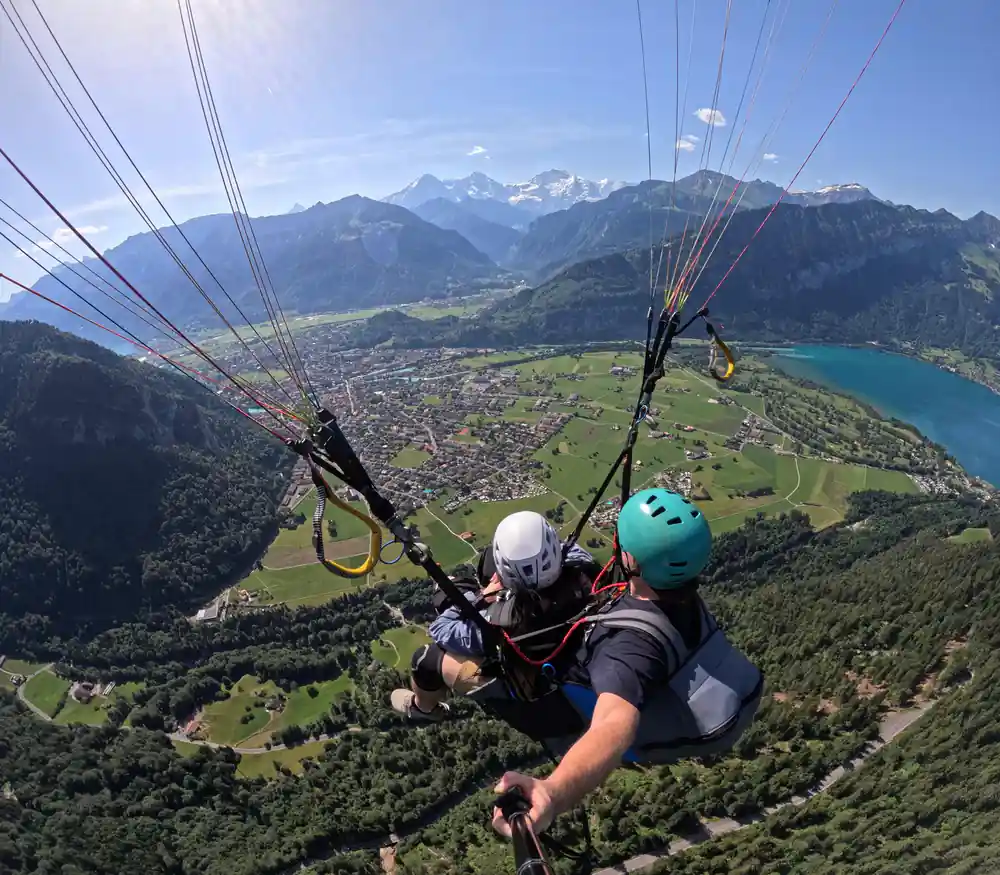
The launch above Beatenberg, with the wing laid out and ready before anyone leaves the ground.
Who Is Flying the Wing
The flight includes a qualified pilot. That single fact is the one worth holding onto rather than the one worth explaining away: the person flying you is not a friend of the operator with a spare harness, and flying a paying passenger tandem is the pilot's job, not a favour. Everything else follows from that.
The day itself is guided in English and German, and it runs to a set shape rather than an improvised one: a drive from the meeting point up towards the launch, on the order of twenty minutes, then a short walk of around five minutes on foot to the launch above Beatenberg. The flight itself takes around fifteen minutes from there, before landing on the Höhematte a few minutes later. The whole booking runs to about an hour and a half.
What Decides Whether You Fly
The question that matters most is not answered in a booking confirmation. It is answered at the launch, on the day, by the person standing there looking at the wind and the sky. A booking secures a place on a flight; it does not, and cannot, secure a particular hour of weather. That is not a loophole in the product. It is the product working the way tandem paragliding has to work.
This is also why a schedule printed weeks in advance is never the full story. The decision about whether conditions are right for a wing to fly happens close to the moment itself, above Beatenberg, not from an office days earlier. A passenger who understands that going in is a passenger who is not surprised by it on the day.
91 kg
One of six stated restrictions: this flight does not carry tandem passengers over 91 kilograms.
When the Answer Is No
The single most honest thing to say about paragliding safety in Switzerland is this: a flight held back or postponed for wind is the safety system doing exactly what it exists to do. It is not an operator being difficult, and it is not a booking gone wrong. It is the same ground judgement being applied to your flight that is applied to every flight that launches above Beatenberg on a good day.
It helps to go in expecting that possibility rather than being blindsided by it. A day with poor conditions is not a failure of planning on your part or the operator's; it is what happens when a decision that is supposed to be made honestly is made honestly. Building a little flexibility into a trip, rather than pinning everything on one afternoon, is the practical response to that fact.
Who This Flight Isn't For
The restrictions attached to this flight are specific rather than vague, and they are worth stating plainly: children under five, pregnant women, people with heart problems, people with epilepsy, anyone over 91 kilograms (200 lb), and people with mobility impairments are not suitable for this flight.
These are not small print inserted to make refusal easier. They are the same list a tandem pilot works from before deciding whether a flight can go ahead at all, and a flight is turned down for one of them exactly as readily as it is turned down for wind. Checking this list honestly against yourself or whoever you are booking for, before the day rather than on it, is the single most useful thing a passenger can do.
What to Ask Before You Book
Two questions are worth asking before booking a tandem flight anywhere, not only in Switzerland. The first is whether any of the restrictions above apply to you or the person you are booking for, answered honestly rather than optimistically. The second is what happens to a booking if the wind rules out the day: it is a fair question to put to any operator, and a straight answer to it tells you a good deal about how the rest of the flight is run.
Beyond that, there is not much a passenger needs to arrange themselves. The flight includes a qualified pilot, the equipment for the flight, hiking boots, and transport as part of the booking. What is left to bring is ordinary: a jacket, clothing suited to the weather on the day, and closed-toe shoes for the walk to the launch.
Check available dates for your Interlaken flight
from US$223Reserve now & pay later