If you read nothing else
- Swiss launch sites split by where the flight lands, not by scenery: some come down in a meadow inside a town, others in a field well outside it.
- A site built for altitude and distance is a different day out from one built for a short introduction, and the landing tells you which is which.
- A valley launch can land you back inside the town you are staying in, while a higher alpine site's landing can be a drive away from it.
- Some sites run a different meeting arrangement in winter than in summer, which is a sign that not every launch works all year round.
More Launch Sites Than You Can Compare
Switzerland has mountains on nearly every side of nearly every town, and wherever a slope is steep enough to run off and open a wing, somebody has probably already flown from it. Search for where to paraglide in Switzerland and dozens of named sites turn up across the Alps and the Jura, from valley shoulders a short drive from a train station to ridgelines that need a cable car to reach.
Counting them tells you almost nothing useful, and listing them tells you even less. Two sites at a similar height can lead to completely different days out: one ends in a field beside a supermarket within walking distance of your hotel, the other ends somewhere a minibus has to come and collect you from. That difference decides more about the day than the view from the top does.
The Real Difference Is the Landing
Ask what actually separates Swiss sites and the answer is rarely the launch. Getting off a Swiss mountainside is the easy part; there is no shortage of slope anywhere in the country. What decides where a first tandem flight happens is where the flight can land, and a flat, open, public space large enough to bring a paraglider down safely, right where visitors are already staying, is a far rarer thing than a launch.
A dramatic high mountainside will happily host a launch with nothing sensible below it to land on, which is why plenty of striking terrain never becomes a beginner site. A town built on a flat valley floor, with a meadow at its centre, solves that problem outright, and it is why the busiest tandem operations cluster where the geography hands them a landing rather than where the peaks are tallest.
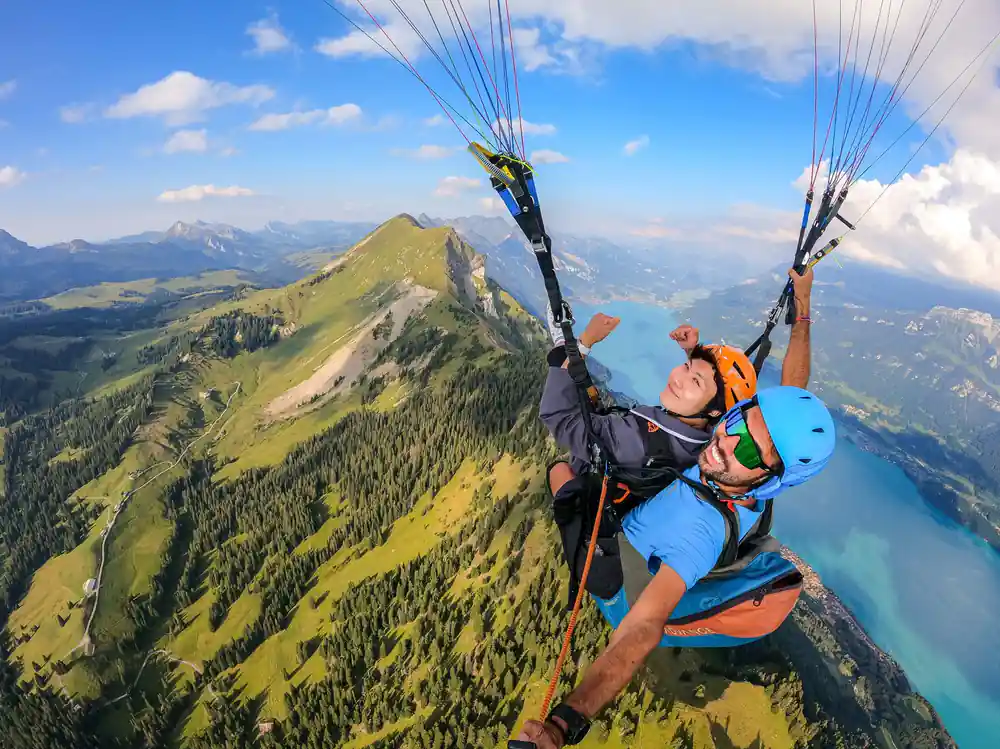
The Hohematte, the public meadow where flights land in the middle of Interlaken.
A Valley Launch With a Town Landing
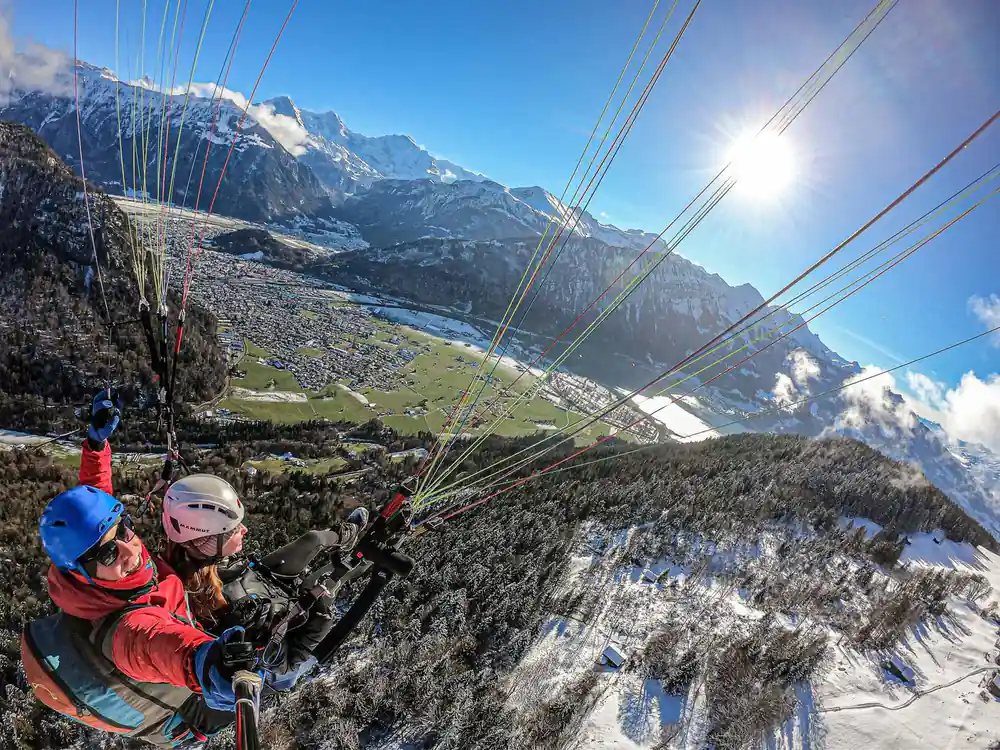
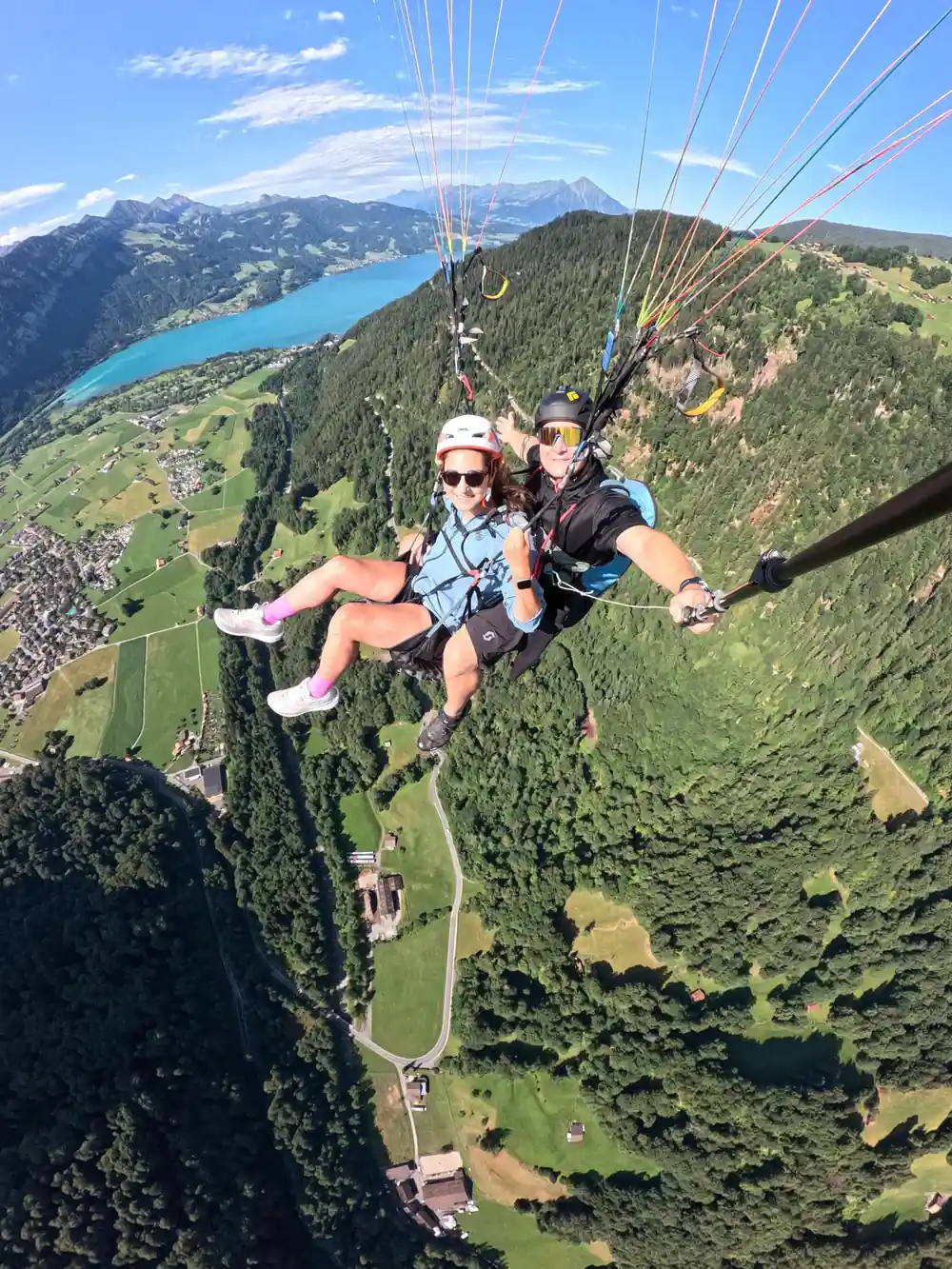
Interlaken is the clearest example of the pattern. The town sits on flat valley floor between Lake Thun and Lake Brienz, its name literally meaning between the lakes, with mountains rising steeply on both sides of that flat strip. One of those slopes, above the village of Beatenberg north of the town, is used as a launch, and the flight comes down on the Hohematte, the large public meadow in the middle of Interlaken itself.
That combination, a launch on a nearby slope and a landing inside the town rather than out in a field a coach has to reach, is what makes a site suit a first tandem flight rather than an experienced pilot's cross-country day. You do not need to already be staying near the mountain. You need to be staying near the town, and the flight and the landing come to you.
The Higher Alpine Sites
Further from the valley floors, Switzerland has launches at genuine altitude, reached by cable car or a longer drive rather than a short hop from a hotel. These suit pilots who already fly and want height and distance rather than a short introduction, and the landing options around them are correspondingly less convenient: a field some way off, a walk out, or a pickup arranged in advance rather than a meadow in the middle of town.
They are rarely where a first tandem flight happens, and that has nothing to do with safety and everything to do with logistics. A launch a cable car away from a valley town, with a landing that is itself a drive from where you are staying, turns a short afternoon activity into most of a day.
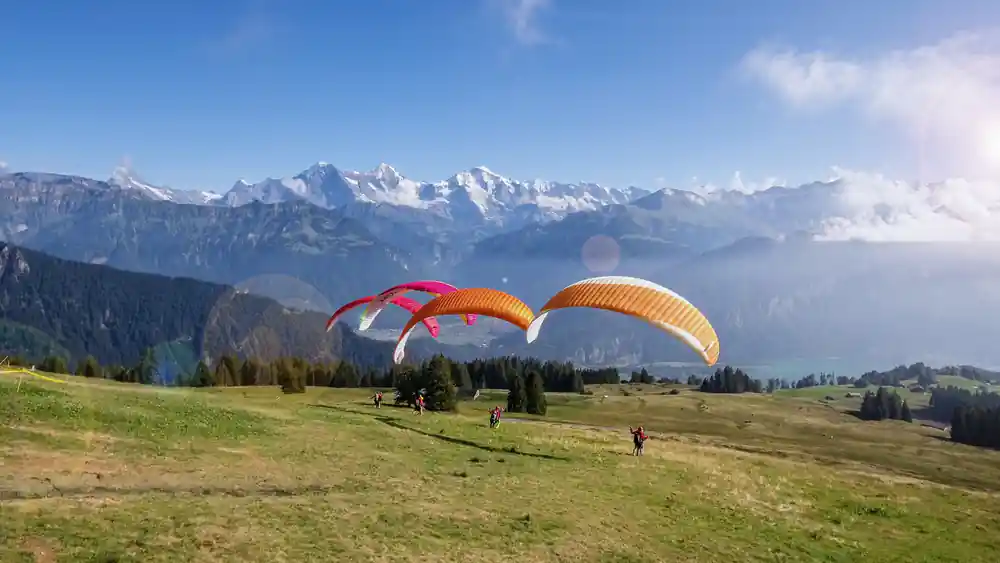
Wengen and the Lauterbrunnen Valley
Wengen and the Lauterbrunnen valley both come up whenever the subject is Swiss paragliding, and they are worth knowing by name even without a breakdown of each one's own launch and landing. The Jungfrau massif stands at the head of the valley, and flying in this country happens against that kind of backdrop as often as it happens above a lake.
What matters when weighing a place like this against a valley-floor town is the same question as anywhere else in the country: how far the landing is from where you are actually staying, and whether the site suits a first flight or a pilot who wants more of the mountain. Treat any specific site's height, operator or timing as something to check directly rather than assume from its name.
Why One Valley Gets Most First Flights
Put the whole country side by side and a pattern falls out that has nothing to do with which mountains are the most impressive. Mountains are not the scarce resource in Switzerland; a slope worth launching from exists near almost every town in the Alps. A flat, public meadow large enough to land a paraglider in the middle of that same town is the rare part, and very few places have both within a few minutes of each other.
That is the honest reason almost every first tandem flight in the country happens in one valley rather than being spread evenly across the map. It is not that the flying is better there than anywhere else in Switzerland. It is that the valley solved the landing problem long before paragliding existed, by being flat between two lakes with a public meadow at its centre, and every other site is still working around that same problem in one way or another.
See available dates for a tandem flight in Switzerland
from US$223Reserve now & pay later